
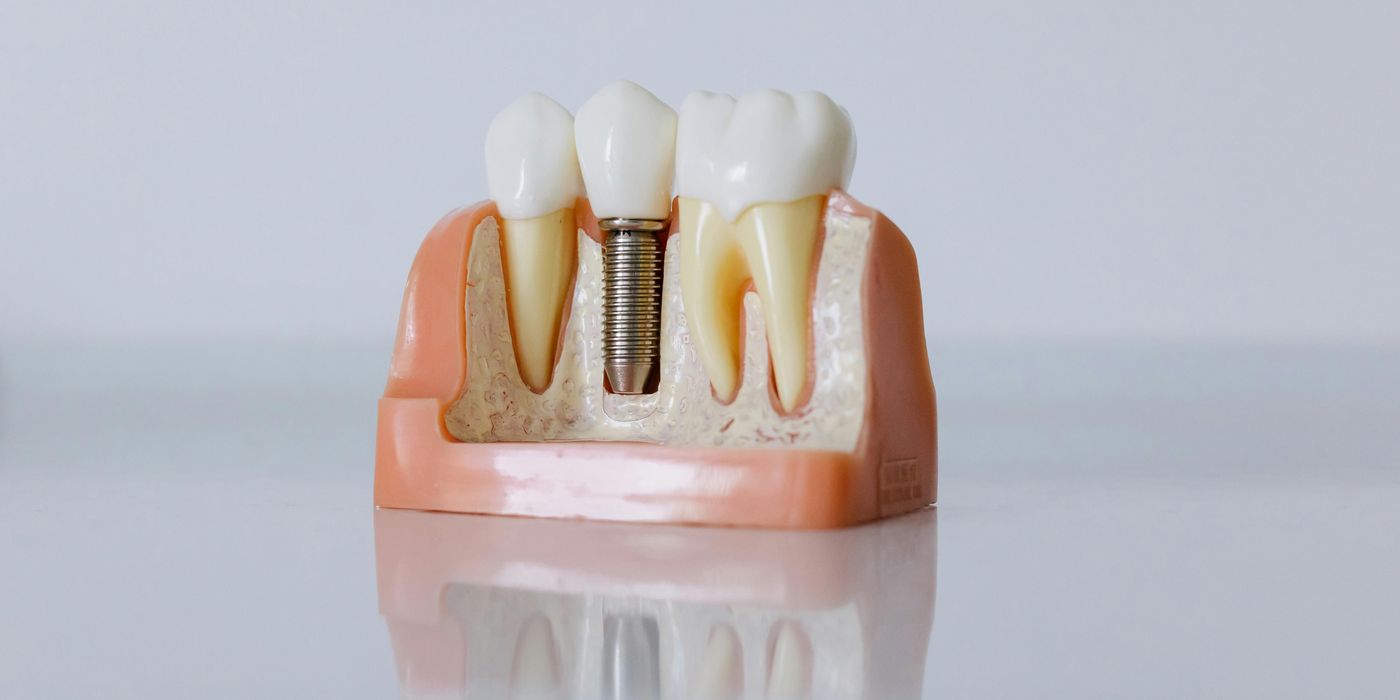
How long do dental implants last? The titanium implant post — the part that's surgically placed in your jawbone — can last 25 years or longer. Many implants last a lifetime with proper care. The restoration on top (the crown, bridge, or prosthesis) typically lasts 10–15 years before it may need to be replaced due to normal wear, similar to a traditional dental crown. At Texas Dental Implant Center in Houston, Dr. Michel Azer places every implant using 3D-guided surgery for precise positioning, which directly impacts long-term success.
The Two Parts Have Different Lifespans
It's important to understand that a dental implant is actually two components with different lifespans.
The implant post is made from medical-grade titanium, a biocompatible material that fuses permanently with your jawbone through a process called osseointegration. Once integrated, the post becomes part of your jaw. It doesn't decay, doesn't get cavities, and doesn't weaken over time the way natural tooth roots can. This is why implant posts routinely last 25+ years and often last for the rest of a patient's life.
The restoration — whether it's a single crown, a bridge, or a full-arch prosthesis — is the visible part that functions as your tooth. Restorations are subject to the same wear and tear as natural teeth. Chewing forces, grinding, and normal daily use gradually wear down the material. Most crowns and prostheses last 10–15 years. When a restoration wears out, it's replaced without disturbing the implant post underneath.
What Affects How Long Dental Implants Last?
Surgical precision matters. An implant placed at the correct angle, depth, and position in healthy bone has the best chance of lasting decades. This is why Dr. Azer uses 3D CBCT scanning and digitally guided surgical plans on every case — it removes the guesswork.
Bone quality and quantity play a role. Implants need a solid foundation. Patients with adequate bone density at the time of placement tend to have better long-term outcomes. When bone is insufficient, Dr. Azer performs bone grafting before implant placement to build a strong foundation.
Oral hygiene is critical. Implants can't get cavities, but the gum tissue around them can still become infected — a condition called peri-implantitis. This is the leading cause of late implant failure. Brushing twice daily, flossing, and keeping regular dental checkups prevents this.
Smoking significantly reduces implant lifespan. Smoking restricts blood flow, impairs healing after surgery, and increases the risk of peri-implantitis. Patients who smoke have higher failure rates than non-smokers.
Grinding and clenching (bruxism) puts excessive force on implants and restorations, which can shorten the lifespan of the crown or prosthesis. A night guard can protect against this.
Provider expertise matters. Studies show that implants placed by specialists — periodontists and oral surgeons — have higher long-term success rates than those placed by general dentists.
How to Make Your Dental Implants Last
The good news is that implant care is simple. Brush twice a day. Floss daily — including around your implant. See your dentist for regular checkups and cleanings. If you grind your teeth, wear a night guard. Don't smoke. That's it. Implants don't require any special products or complicated maintenance routines.
At Texas Dental Implant Center, Dr. Azer monitors every implant case through the healing process and recommends a follow-up schedule to catch any issues early.
Dental Implants vs Other Options: Lifespan Comparison
Dental implants: 25+ years (post), 10–15 years (restoration). Traditional dentures: 5–7 years. Dental bridges: 10–15 years. Partial dentures: 5–10 years.
When you factor in replacements over a 20-year period, dental implants are often the most cost-effective option despite the higher upfront investment.
Frequently Asked Questions
Do dental implants last forever?
The titanium implant post can last a lifetime. The crown or prosthesis on top typically lasts 10–15 years before needing replacement. With good oral hygiene and regular checkups, the post itself should never need to be replaced.
What is the failure rate of dental implants?
Dental implants have a 95–98% success rate over 10 years. When placed by a board-certified periodontist using guided surgery, the success rate is at the higher end of that range.
How do I know if my implant is failing?
Signs include pain or discomfort around the implant, swelling, the implant feeling loose, or gum recession exposing the post. If you notice any of these, see a specialist immediately.
Can a dental implant last 30 years?
Yes. Many patients keep their implant posts for 30+ years. The restoration may need to be replaced once during that period, but the implant itself can last indefinitely with proper care.
Does insurance cover implant replacement?
Some dental plans cover a portion of restoration replacement. Our team verifies your benefits before any treatment. We also offer financing options.
Your implants are only as good as the foundation they're built on. Schedule a free consultation with Dr. Azer to find out if dental implants are right for you — and get a treatment plan designed for long-term success.